Blog
“Día de los Muertos in Mariana: Where Love Crosses the Veil”
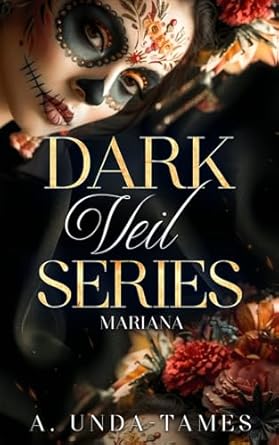
Discover how Mariana in the Dark Veil Series, intertwines the mysticism of Día de los Muertos with dark romance — where love, death, and the supernatural collide under the watchful gaze of La Catrina and the spirit guides known as Alebrijes.
Between the Living and the Dead
In Mariana, love doesn’t just cross boundaries — it crosses worlds.
Set during Día de los Muertos, the story unfolds at the exact moment when the veil between the living and the dead grows thin.
It’s a time of music and marigolds, but also whispers and omens.
Because when the spirits return… they bring their secrets with them.
The Tradition: More Than a Celebration
Día de los Muertos (Day of the Dead) is one of Mexico’s most meaningful traditions — a celebration that transforms grief into color, memory into light.
Families create ofrendas, altars filled with candles, sugar skulls, pan de muerto, and photographs to welcome back loved ones who’ve passed on.
It’s believed that for a brief moment each year, those souls return — not to haunt, but to celebrate life with us once more.
That belief inspired Mariana’s tone — suspenseful, beautiful, and alive with the tension between two worlds.
Alebrijes: Guardians of the Soul
Throughout the novel, you’ll find the echo of Alebrijes, fantastical creatures born from both dream and legend.
In Mexican folklore, Alebrijes act as spirit guides — protectors who help souls navigate the crossing between worlds. Each one carries meaning through its animal form and color:
-
Jaguar: power and courage
-
Owl: healing and intuition
-
Dog: loyalty and protection
-
Dragon: passion and transformation
Traditionally, Alebrijes blend elements of three of the four natural elements — air, fire, and earth — reminding us that we are connected to both nature and spirit.
In Mariana, they symbolize that same duality — beauty and danger, protection and temptation — mirroring the emotional world of the heroine herself.
La Catrina: The Lady of the Dead
The figure of La Catrina, with her elegant hat and skeletal face, has become the symbol of Día de los Muertos. But her origins run deep — all the way to Mictecacihuatl, the Aztec goddess of death, who guards the bones of the departed in the underworld.
Her story represents reverence, not fear — a reminder that death is part of the cycle of life.
In Mariana, this myth becomes flesh.
During one haunting scene, the music fades, the lights dim, and a tall, skeletal woman enters — her skirt a tangle of serpents, her voice commanding silence. It’s one of the story’s most chilling and symbolic moments, inspired by La Catrina’s divine legacy and the sacred awe she evokes.
Love, Death, and the Veil Between
Setting a dark romance during Día de los Muertos gave Mariana a rare kind of energy — one where desire feels haunted, and love becomes eternal.
Every choice Mariana makes feels shadowed by the spirits around her — the people she’s lost, the lovers who changed her, and the past she can’t quite escape.
It’s a story where death doesn’t end love — it transforms it.
And in that transformation lies the very heart of The Dark Veil.
🌒 Join the Dark Bloom Society
If you’re drawn to stories where romance meets mythology, passion meets danger, and love transcends life itself — join me inside the Dark Bloom Society.
It’s where we celebrate the beauty of dark romance, the mystery of death, and the power of storytelling that lingers long after the last page.